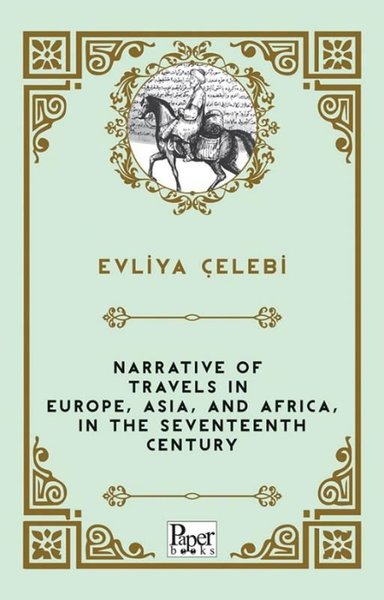
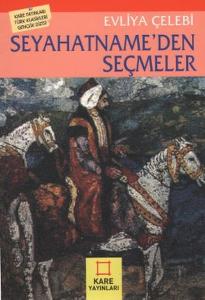
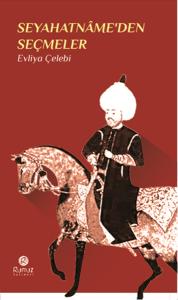
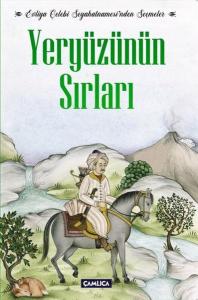
Evliya Çelebi (25 March 1611-1682) was an Ottoman explorer who travelled through the territory of the Ottoman Empire and neighboring lands over a period of forty years, recording his commentary in a travelogue called the Seyâhatnâme (“Book of Travel”). The name Çelebi is an honorific title meaning “gentleman” or “man of God”.
Although many of the descriptions the Seyâhatnâme were written in an exaggerated manner or were plainly inventive fiction or third-source misinterpretation, his notes remain a useful guide to the culture and lifestyles of the 17th century Ottoman Empire. The first volume deals exclusively with Istanbul, the final volume with Egypt.
Evliya is noted for having collected specimens [clarification needed] of the languages in each region he traveled in. There are some 30 Turkic dialects and languages cataloged in the Seyâhatnâme. Çelebi notes the similarities between several words from the German and Persian, though he denies any common Indo-European heritage. The Seyâhatnâme also contains the first transcriptions of many languages of the Caucasus and Tsakonian, and the only extant specimens of written Ubykh outside the linguistic literature.
Evliya Çelebi (25 March 1611-1682) was an Ottoman explorer who travelled through the territory of the Ottoman Empire and neighboring lands over a period of forty years, recording his commentary in a travelogue called the Seyâhatnâme (“Book of Travel”). The name Çelebi is an honorific title meaning “gentleman” or “man of God”.
Although many of the descriptions the Seyâhatnâme were written in an exaggerated manner or were plainly inventive fiction or third-source misinterpretation, his notes remain a useful guide to the culture and lifestyles of the 17th century Ottoman Empire. The first volume deals exclusively with Istanbul, the final volume with Egypt.
Evliya is noted for having collected specimens [clarification needed] of the languages in each region he traveled in. There are some 30 Turkic dialects and languages cataloged in the Seyâhatnâme. Çelebi notes the similarities between several words from the German and Persian, though he denies any common Indo-European heritage. The Seyâhatnâme also contains the first transcriptions of many languages of the Caucasus and Tsakonian, and the only extant specimens of written Ubykh outside the linguistic literature.
| Taksit Sayısı | Taksit tutarı | Genel Toplam |
|---|---|---|
| Tek Çekim | 536,25 | 536,25 |
-
-
-
-
%40İNDİRİM272,00TL 163,20TL
-
%37İNDİRİM510,00TL 321,30TL
-
%35İNDİRİM160,00TL 104,00TL
-
-
-%27
 Stokta yok
 -
-
%37İNDİRİM185,00TL 116,55TL




-
%25İNDİRİM525,00TL 393,75TL
-
%25İNDİRİM410,00TL 307,50TL
-
-
-%25
Stokta yok
-
-%25
Stokta yok
-
-
-%25
Stokta yok
-
-%25
Stokta yok
-
-%25
Stokta yok
-
-%25
Stokta yok